A Designer's Real-World Review of "I Camp Believe You Don’t Like Nature"
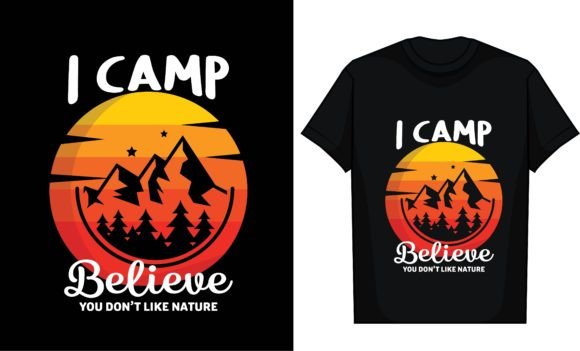
From my seat at the embroidery machine, surrounded by piles of fabric swatches and half-finished projects, I look at a design like "I Camp Believe You Don’t Like Nature" with a very practical eye. It’s not just about how cute it looks on the screen. It’s about how it will actually stitch out, how it will feel on a finished product, and whether the client, customer, or gift recipient will genuinely love it. Today, let’s walk through that process with this particular camping-themed graphic.
The Immediate Mood & First Impressions
Right away, this design feels playful and confidently quirky. The phrase itself—a clever twist on a common saying—sets a lighthearted, outdoorsy mood. It’s not a stern declaration of love for nature; it’s a wink and a smile. This visual personality is crucial. For an embroidery project, it means the finished piece shouldn’t feel overly serious or formal. It belongs on items meant for fun, relaxation, and personal expression.
The layout, with its central focus on the text, suggests a design that will translate well into stitch. There’s a clear hierarchy, which is excellent for embroidery clarity. The level of detail appears balanced—not so minimal that it feels empty, but not so densely packed that it becomes a stitch-density nightmare on a cap or a thin t-shirt. My first thought is that this would be a fantastic candidate for a custom tote bag for a camping enthusiast or an oversized sweatshirt for a cozy cabin weekend.
Where This Design Thrives in Real Projects
Imagine you’re preparing for a craft fair, and you want a line of products that spark conversation and smiles. "I Camp Believe You Don’t Like Nature" is a prime candidate. Let’s run through some real-life embroidery situations.
For custom apparel, it shines on stable, medium-weight fabrics. A cotton sweatshirt or a sturdy polo shirt would be perfect. The design’s personality elevates a basic garment into a statement piece. For handmade products like canvas tote bags or apron pockets, it adds that boutique, personalized touch that Etsy shoppers love. As a personalized gift, imagine this embroidered onto a durable tea towel for a friend who loves their garden, or stitched onto the corner of a blanket for a family who camps every summer.
It also has strong potential in the baby embroidery and nursery decor niche, provided the colors are adjusted to be softer. On a little onesie or a nursery pillow cover, with a playful font and maybe a subtle nature motif added, it becomes a sweet, modern take on a classic theme. For holiday gifts or wedding gifts for an outdoorsy couple, embroidered onto a set of kitchen towels or pillow covers, it feels thoughtful and unique.
From a craft business perspective, this design is a versatile digital embroidery file. It can anchor a whole line of small shop merchandise—from patches to caps to pillow covers. Its clear, readable theme helps with brand consistency if you’re building an outdoorsy or humorous product line. In commercial embroidery, say for a local hiking club’s merchandise, it’s engaging and easily recognizable.
Caution Areas: Where to Test Carefully
No design is universally perfect for every substrate, and a prudent embroidery designer always thinks about the limitations. Here’s where I would proceed with caution with "I Camp Believe You Don’t Like Nature."
Small hoop sizes and highly curved surfaces like caps could be tricky if the lettering is particularly small or tightly spaced. The stitch density needs to be right to prevent puckering on that curved brim. Thin or stretchy fabric, like a lightweight t-shirt, requires excellent stabilizer and potentially a lighter stitch setting to avoid distortion. Always, always test on scrap fabric first.
Dark fabric backgrounds require careful thread color contrast planning. You might need to adjust the default color palette to ensure the text pops and doesn’t get lost. Also, products destined for frequent washing, like baby clothes or kitchen towels, need a robust stitch structure. Check that the fill areas, if any, are secure and that small details won’t fray over time.
Finally, for items like patches or embroidered patches intended for layered garments (like on a backpack), the overall density and edge finish are critical for durability. The design’s clarity in a black and white mockup is a good test—if it holds its visual appeal there, it’s likely a strong, clear design.
Impact on Customer Perception & Product Value
When you stitch this out onto a finished product, what does it communicate? A well-executed embroidery of "I Camp Believe You Don’t Like Nature" conveys craftsmanship. The crispness of the satin stitches (assuming that’s the technique used) or the smoothness of the fill stitches adds tangible product value. It moves the item from "printed graphic" to "handmade product."
This builds customer trust. They see the care in the stitching. For a giftability, it feels more special and lasting than a vinyl decal. The humorous, personal theme increases buyer engagement—people connect with a clever phrase. It can turn a simple tote bag into a conversation starter, which is gold for Etsy sellers and craft fair products.
For digital product sellers, offering this as a well-tested design asset means your customers (other makers) can rely on it to produce professional-looking finished products. Your reputation grows when your files perform reliably in real embroidery projects.
Practical Notes Before You Hoop Your Fabric
Before you commit this design to a client’s order or your own boutique product line, here’s my standard pre-flight checklist. I recommend you do the same.
- Test, test, test. Run the embroidery file on a scrap of the exact fabric you plan to use, with the exact stabilizer.
- Check thread color contrast against both light and dark background mockups. Does it read clearly?
- Review stitch density in the file preview. Does it look appropriate for your target fabric (e.g., lighter for t-shirts, denser for patches)?
- Confirm the effective hoop size needed. Does the design scale well up or down for your specific product dimensions?
- Inspect small details and any potential tricky corners. Will your machine and thread handle them cleanly?
- Crucially, confirm the licensing provided with the digital file. Is it clear for personal use, commercial use, or both? Never assume. This protects your craft business.
- Finally, consider fabric texture. A very textured fabric like a waffle-knit sweater might obscure fine details, so a simpler adaptation might be better.
"I Camp Believe You Don’t Like Nature" has the kind of charm and clear thematic focus that makes it a worthwhile addition to a designer’s library. Its success, however, will always come down to that practical, hands-on evaluation at the machine. By pairing its playful concept with thoughtful embroidery execution, you can create products that truly resonate—whether for a personal gift, a custom order, or your next bestselling shop item.